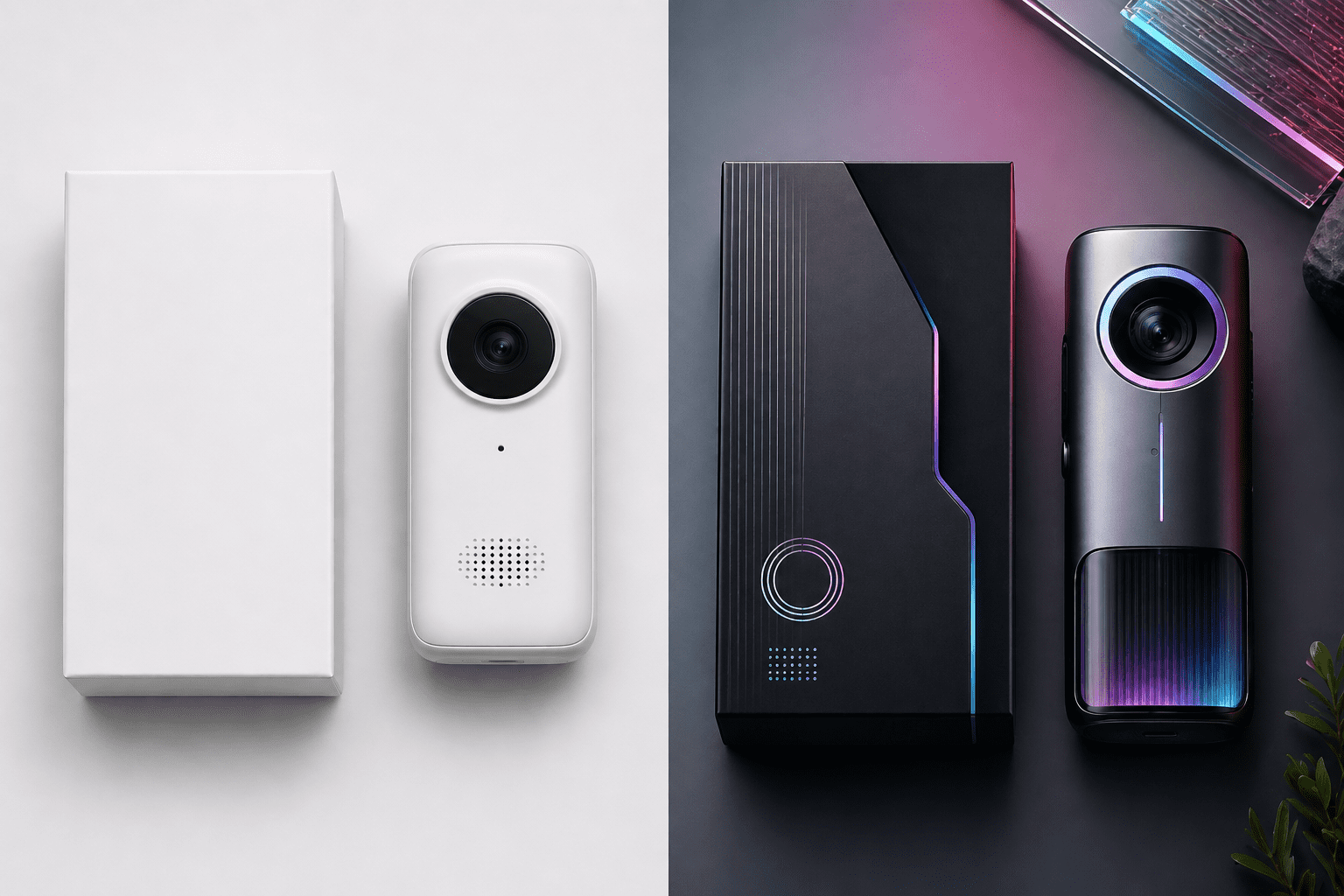
Private Label Is Not a Strategy. It's a Starting Point.
Most Western founders building a consumer electronics brand start the same way. They find a product on Alibaba or through a sourcing agent. They put their logo on it. They launch. It works — for a while.
Then year two happens.
A competitor finds the same factory. Sometimes the factory itself starts selling a version direct. The product gets copied, undercut, and commoditised. Margins compress. The brand that felt real starts to feel fragile.
This is the private label trap. And almost every founder building in this space hits it eventually.
The brands that survive it are the ones who made a decision early — or not too late — to move from renting their product to owning it.
What Private Label Actually Means
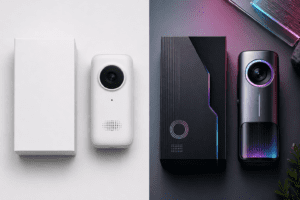
Private label means you are selling someone else's product under your brand name. The factory designed it. The factory owns the tooling. The factory decides the components. You just put your name on the box.
That is not a criticism. It is a legitimate way to get to market fast. Especially when you are validating whether your audience will buy at all.
But it comes with a ceiling.
You cannot meaningfully differentiate the product. You cannot control quality beyond basic inspection. You cannot prevent the factory from selling the same thing to your competitor tomorrow. And you have no engineering asset — nothing proprietary, nothing that compounds in value as your brand grows.
What Changes at Year Two
By year two, the founders who started with private label are usually facing one of three situations:
Situation 1: The product is working and you need a Version 2. Your audience is growing. They want improvements. But you can't improve what you don't own. You are dependent on the factory making changes on their timeline, with their priorities.
Situation 2: A copy has appeared. On Amazon. On TikTok Shop. It looks almost identical to yours. It is cheaper. Because it came from the same factory, or a factory that bought the same components. You have no moat.
Situation 3: You want to raise money or exit. An investor or acquirer looks at your product and asks: what do you own? If the answer is "our brand and our Shopify store" — that is a much weaker position than if you can say "our engineering, our firmware, our tooling."
All three of these situations point to the same solution. You need to own the product.
What Owning Your Product Actually Means
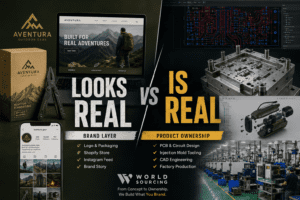
Owning your product does not mean building a factory. It means the engineering is yours.
Specifically:
Your own mechanical design. The housing was engineered for your product. The tolerances, the materials, the feel — all specified by your team or your development partner. The tooling belongs to you.
Your own electronics. The PCB was designed around your product requirements. Not pulled off a shelf and dropped in. This means you control performance, quality, and future iterations.
Your own firmware. For any product with software inside — cameras, audio glasses, wearables, AI gadgets — firmware is where the product experience lives. If you own the firmware, you can update it, improve it, lock it. If you don't, you can't.
When these three things are yours, a factory cannot replicate your product. They can make something that looks similar. But it won't be the same. That is a moat.
The Transition — How Brands Make the Move
Most brands do not go from private label to fully custom overnight. The transition usually happens in stages.
Stage 1: Start with a proven platform — an existing product architecture that already works — and customise the exterior, firmware, and key components. You are not starting from zero. You are building something differentiated on a foundation that is already validated. This is faster and cheaper than a ground-up build.
Stage 2: After your first real sales cycle, you have data. You know what customers want improved. You know what your margins look like. You know what Version 2 needs to be. Now you can commission a proper ground-up custom build — your architecture, your components, your tooling — and manufacture it at scale.
This two-stage approach is how most serious consumer electronics brands get built without burning through capital at the wrong moment.
The Cost of Waiting Too Long
The founders who wait until year three to make this transition usually find it harder and more expensive than it needed to be.
By then, they are managing a brand that has grown on top of a product they don't control. Any engineering work now has to be done without disrupting an existing customer base and supply chain. The urgency is higher. The room for error is smaller.
The founders who think about this in year one — even if they start with a private label product — make the transition faster, cheaper, and with more leverage.
What This Means If You Are Building Right Now
If you are a founder in the early stages of building a consumer electronics brand, the question to ask yourself is not "how do I launch fast?" The question is "what do I need to own by the end of year two?"
The answer to that question should shape every decision you make about your manufacturing and development partner from day one.
A partner who helps you launch fast but leaves you with nothing proprietary is not a long-term partner. A partner who builds with ownership in mind — even if the first version is not fully custom — is giving you something to build on.
That is the difference between a product and a brand asset.
World Sourcing Ltd works with Western founders to develop and manufacture consumer electronics in Shenzhen — from concept and engineering to tooling, mass production, and quality control. If you are thinking about the transition from private label to owning your product, we are happy to talk through what that looks like for your category.
Contact: jerry@worldsourcingltd.com