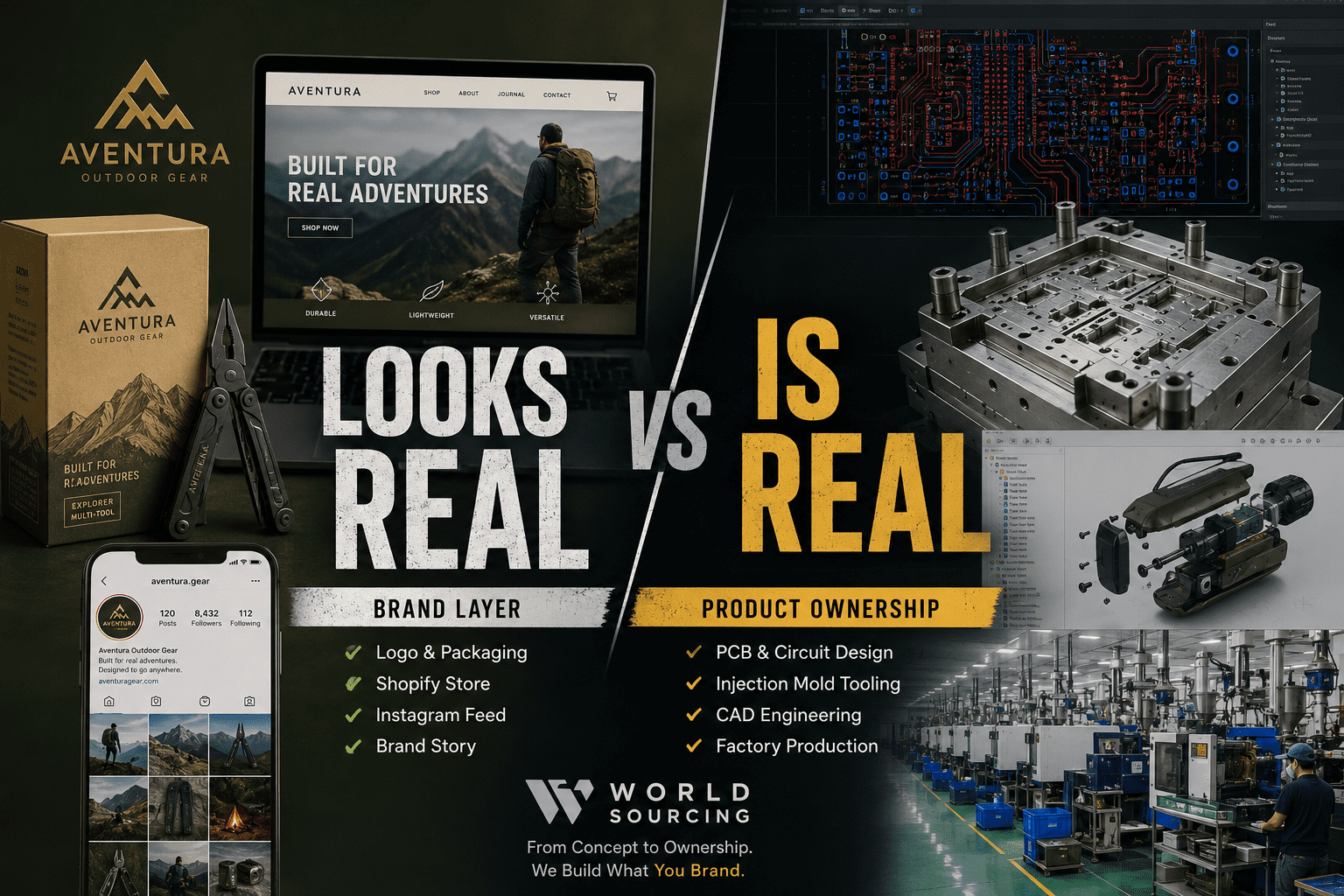
The Gap Between a Brand That Looks Real and a Brand That Is Real
Good branding can make almost anything look legitimate.
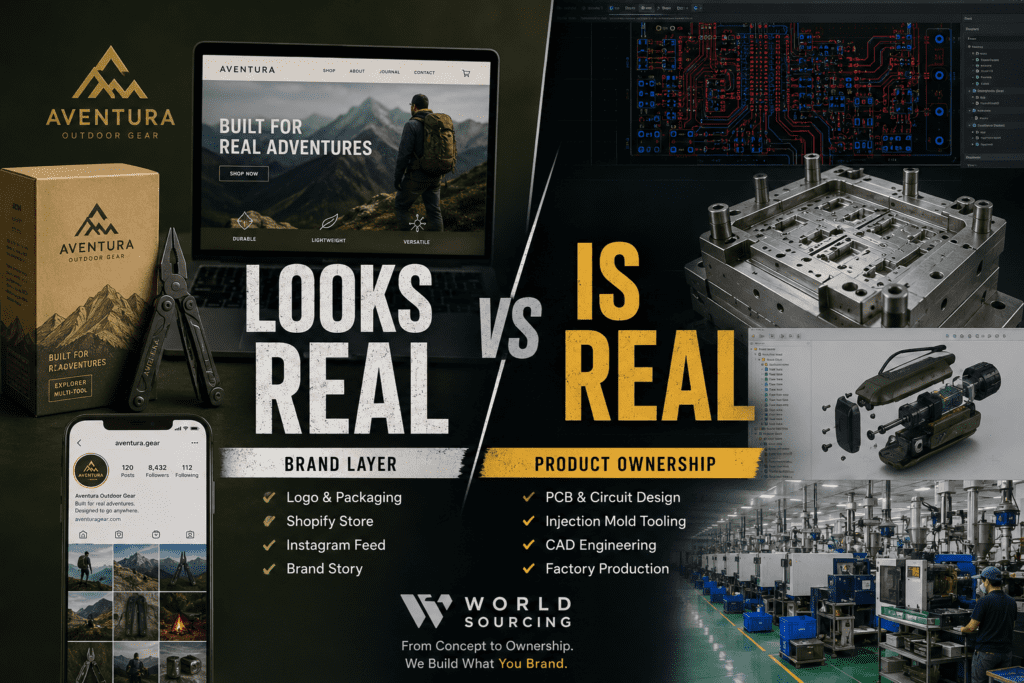
A well-shot Instagram feed. A clean Shopify store. Packaging that feels considered. A founder story that resonates. From the outside, the brand looks like the real thing.
And for a while — sometimes a long while — that is enough.
But there is a gap between a brand that looks real and a brand that actually is real. And in consumer electronics, that gap has a very specific shape.
What the Gap Looks Like From the Inside
Ask the founder of a brand that looks real a few questions and the gap usually appears quickly.
Who owns the tooling for your product? The factory.
Who controls the firmware? The factory, or whoever built it for hire with no ongoing obligation to you.
If your manufacturer doubled your minimum order quantity next season, what would you do? Probably pay it — because there is no alternative lined up.
If a competitor appeared tomorrow selling something almost identical, what would stop them? Probably nothing structural.
None of these questions are about the brand's aesthetic. They are about what sits underneath the aesthetic. And in most cases, for a brand in its early stages, the honest answer to all of them is: not much.
That is not a criticism. It is just the reality of how most consumer electronics brands are built. Fast to market. Private label or light customisation. Brand layer on top. It works — until it doesn't.
When the Gap Becomes Visible
The gap between looking real and being real is invisible when things are going well. Orders are coming in. The community is growing. The factory relationship is fine.
It becomes visible at specific moments.
When a copycat appears and there is no engineering moat to point to. When a retailer asks for exclusivity and the founder realises they cannot guarantee it. When an investor looks at the product and asks what is actually proprietary. When the factory relationship sours and switching costs are enormous because all the tooling stays behind.
These moments are not bad luck. They are the predictable consequence of building a brand layer on top of a product foundation you do not own.
What Makes a Brand Actually Real
In consumer electronics, a brand becomes real when the product underneath it is owned — not rented.
Three things specifically make that true.
Owned tooling. The physical moulds that produce your product's housing belong to your company. A different factory cannot replicate your product without starting from scratch. The aesthetic is protected not by trademark alone but by engineering.
Owned electronics. The PCB was designed for your product specifically. The component selection was made for your requirements. You control what goes into it and what changes between versions — not the factory.
Owned firmware. For any product with software inside, firmware is where the experience lives. If you own it, you can improve it, protect it, and build version two on top of it. If you don't, you are starting over every time.
When these three things belong to the brand, the brand is real in a way that compounds over time. Each iteration builds on the last. The product gets better and harder to copy simultaneously. The manufacturing relationship becomes a choice rather than a dependency.
The Compounding Difference
This is the part that is hardest to see when you are in the early stages of building.
A brand built on owned product does not just survive the moments when the gap becomes visible — it uses those moments as leverage. When the copycat appears, owned engineering is the answer. When the investor asks what is proprietary, there is a real answer. When the factory relationship changes, there are genuine alternatives.
A brand built on brand alone has to rebuild from a weaker position every time one of those moments arrives.
The compounding works in the other direction too. The longer a brand runs on a product foundation it does not own, the harder the transition becomes. The brand has grown on top of something fragile. Changing the foundation without disrupting what is built on top of it gets more complex and more expensive with time.
About us
World Sourcing Ltd helps founders and growing brands develop consumer products from the ground up in Shenzhen. Our work goes beyond sourcing — covering engineering, tooling ownership, electronics development, firmware coordination, manufacturing, and quality control. We believe the strongest brands are built on products they truly own, and we help founders build that foundation from day one.
Contact: jerry@worldsourcingltd.com